

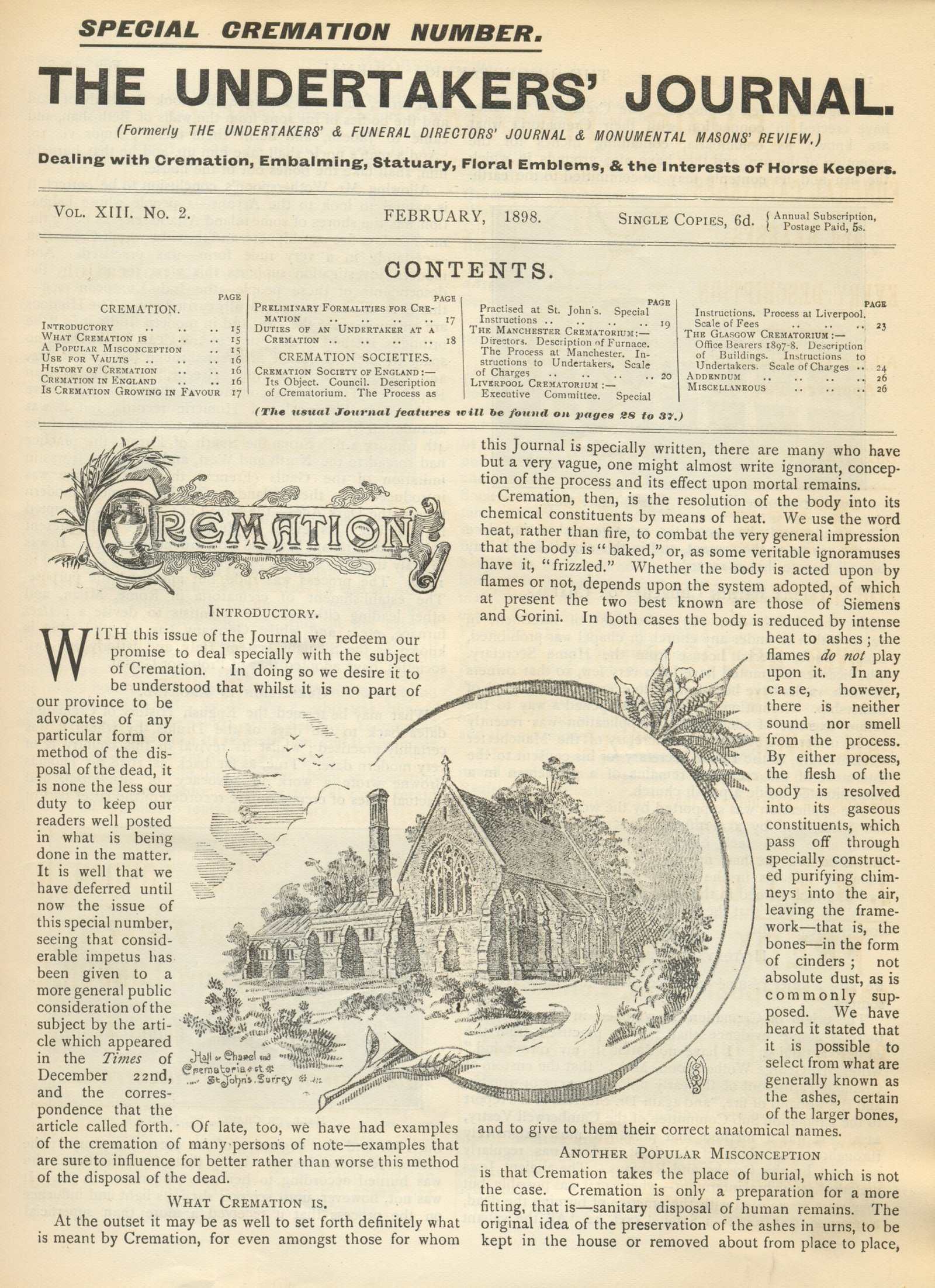
In the first part of a two part special feature, funeral historian, researcher and former FSJ editor Brian Parsons maps industry milestones from the first 70 years of our coverage.
When The Undertakers’ and Funeral Directors’ Journal was first published in 1886 a funeral was a burial, although the previous year had seen the first three cremations take place in the UK. This would be just one of the many changes the journal would chart over the following 140 years. The 19th century had already seen a number of important developments concerning disposal of the dead. These included the introduction of a system to register all deaths; the opening of private cemeteries; burial legislation that enabled local ratepayers to establish their own cemeteries; and the expansion of the undertaking trade, along with allied businesses such as mourning wear, monumental masonry and a raft of suppliers to undertakers.
The early years of cremations at Woking, Manchester, and Glasgow would be covered extensively by the journal. The cremation process, documents, the ashes and transport to the crematorium would be discussed with regularity; crematoria would also advertise. But the progress of cremation was slow, and it would not be until well into the middle of the following century before there was a shift away from burial.
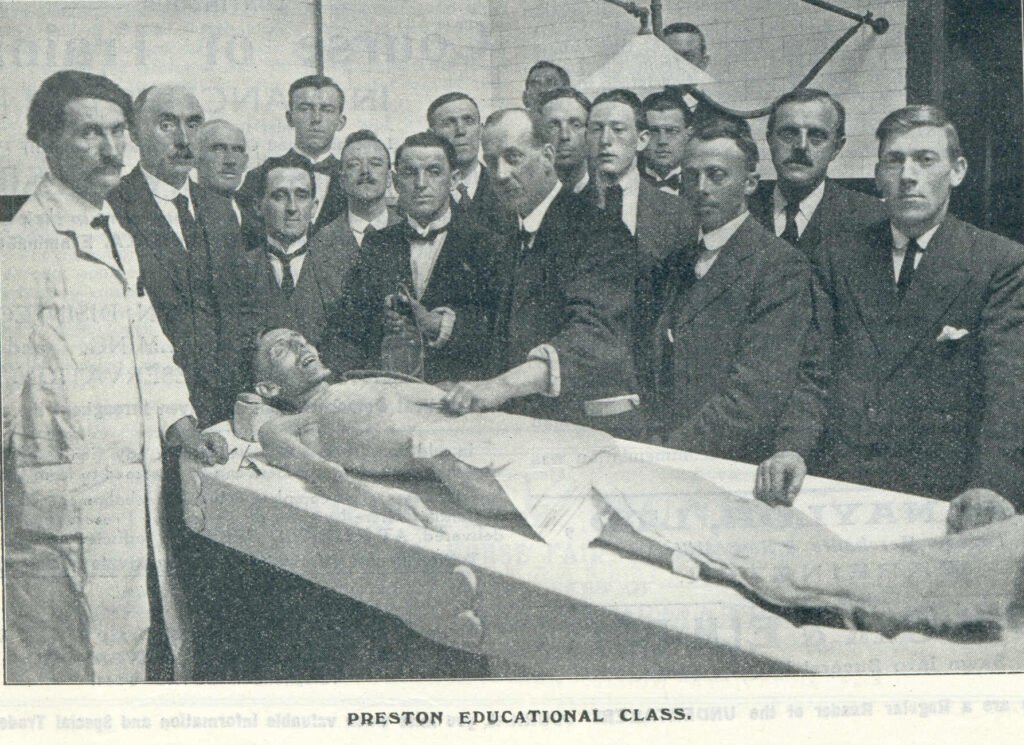
Much information about embalming including the founding of the British Embalmers’ Society and the British Institute of Embalmers can be found within the pages of the journal. This graphic photo of a training session in a mortuary in Preston was published in 1921.
In the 19th century the vast majority of deaths occurred at home. An undertaker would measure the body and return with a finished coffin. The body was kept at home until the funeral, which would be around four to five days later. Arterial embalming was introduced in 1900 when tutors from the US and then Canada toured the UK giving undertakers a rudimentary course of instruction whilst marketing their preservative fluids.
Like cremation, the number of embalmments was very modest, although a few practitioners did band together to form the British Embalmers’ Society. This was followed by establishment of the British Undertakers’ Association to represent the interest of its members. The Undertakers’ Journal reported on the activities of these and other organisations as you can see from the Looking Back section of FSJ.
When the Cremation Act 1902 came into force, it formalised documentation and regulated the establishment of crematoria. Although a few crematoria opened in the first decade, such as Golders Green and Birmingham, preference for cremation was still very small.
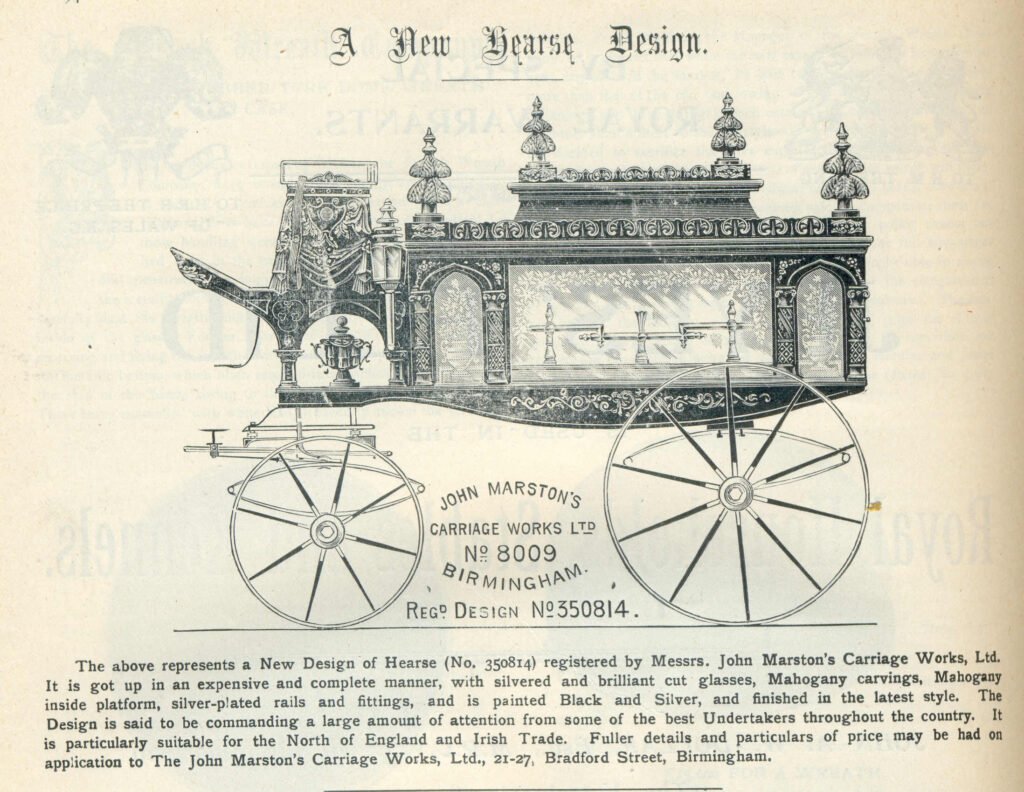
The Birmingham-based hearse and carriage builder John Marston was a regular advertiser in The Undertakers’ Journal.
The early years of the 20th century coincided with the arrival of the first motor cars. These would soon be adapted into hearses and for a while the Journal carried advertisements for both the horse drawn and motor vehicles. Those for the former would gradually disappear over the next two decades and the horse drawn hearse became viewed as very dated.
The First World War would see undertakers volunteering to fight before being formally called up; details of the few exemptions granted were recorded in the publication. Coinciding with the Armistice in November 1918 was the outbreak of Spanish Flu, which caused around 228,000 additional deaths in the UK.
The war years effectively brought an end to the use of mourning wear such as gloves, scarves and hatbands seen at so many Victorian funerals; such accoutrements were not good for morale.
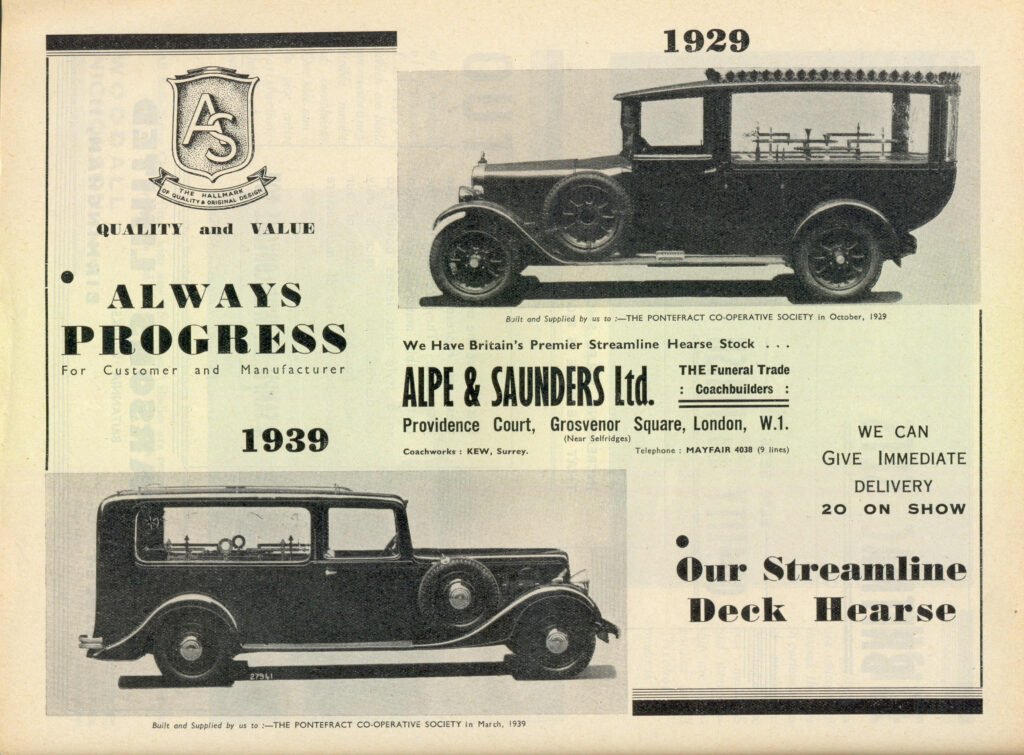
Many coachbuilders advertised in The Undertakers’ Journal including Alpe & Saunders. A decade separates the two hearses depicted in this advertisement from 1939 supplied to the Pontefract Co-operative Society.
The interwar period ushered in a number of developments that would gradually help professionalise the work of the undertaker. The founding of the British Institute of Embalmers in 1927 provided a mechanism
for the training and qualification of new practitioners. Sanitary treatment of the body would intertwine with the start of undertakers providing chapels of rest to accommodate the coffin between death and the funeral. Provision of an alternative resting place for the coffin would be appreciated by many families. Some funeral firms even went so far as constructing purpose-built funeral homes with multiple chapels, a service chapel, embalming theatre and offices all under one roof; but these were exceptional. In 1935 the
British Undertakers’ Association modernised its status through becoming the National Association of Funeral Directors (NAFD).
The 1930s would see local authorities start to build crematoria and promote cremation as an alternative to purchasing land for new cemeteries. By 1939 there were 54 crematoria in operation although only 3.7% of deaths would be followed by cremation. Funeral directors would advertise that they carried out ‘Funerals and Cremations’.
The outbreak of World War Two in September 1939 finally brought an end to the horse drawn hearse in the urban area as concern was expressed at the animals being frightened by bombing. During the following five years funeral directors experienced shortages of metal handles, timber and petrol, although the NAFD negotiated with the Government concerning favourable levels of supplies.
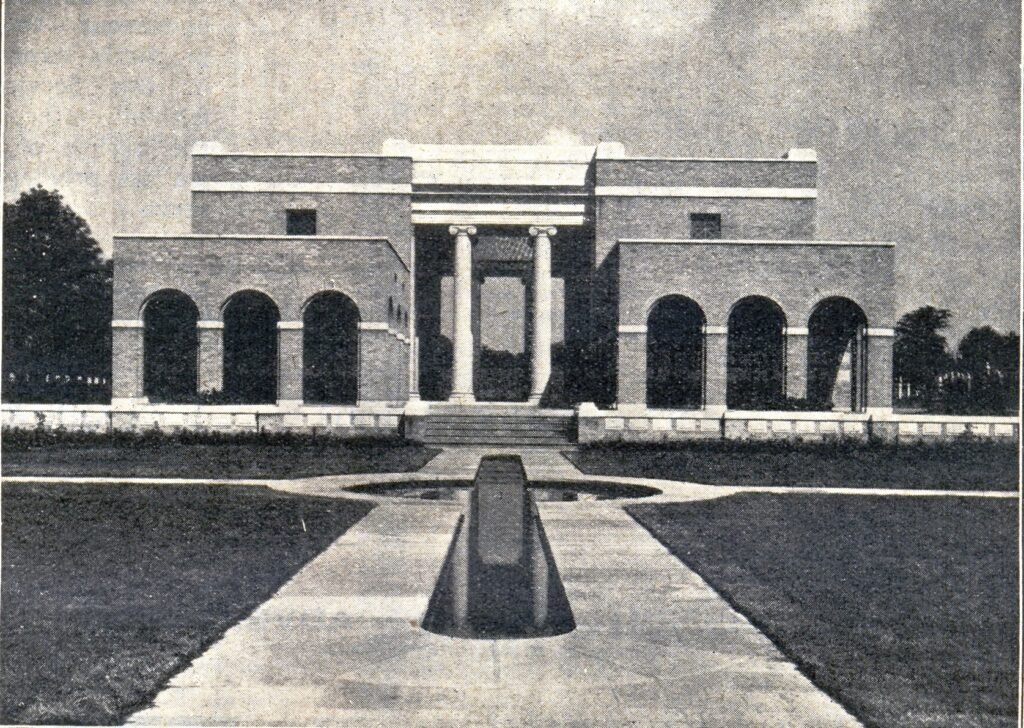
The West London Crematorium in Kensal Green Cemetery was opened just before the declaration of World War Two in September 1939. This view was taken from the Gardens of Remembrance.
The post-war years witnessed a dramatic growth in the preference for cremation. As building materials were needed for new homes, the restriction on the provision of new crematoria lasted until 1952. Four years later a further 55 had been constructed, with 27% of deaths being followed by cremation.
Coffin makers introduced veneered woods along with those made from solid timbers imported from Africa and Japan. It was a move that anticipated the end of the supply of homegrown timber, particularly when Dutch Elm Disease struck in the mid- to late 60s.
The founding of the National Health Service in 1948 led to a greater number of deaths occurring in hospital rather than the family home. Custody of the body encouraged more funeral directors to offer embalming;
this resulted in the growth in membership of the British Institute of Embalmers. With the introduction of the Welfare State in 1949 giving financial support ‘from cradle to grave’, the NAFD negotiated with the government concerning the Death Grant of £20. But the amount was out of step with costs. Funeral finance would be a recurring theme in the ensuing years with enquiries and reports appearing with regularity. This will be one of a range of issues discussed in part two covering the period 1956 to 2026 in next month’s FSJ.